
Protecting your home from water damage is an important part of construction. It helps stop problems like leaks, cracks, damp spots, and mold. Today, there are many roofing solutions to choose from. Depending on the area and type of damage, you can pick the right system. One popular choice is Torch On Roofing in Prince George, also known as a torch down roofing membrane. It is often used on flat roofs.
Flat roofs can be harder to manage than sloped roofs. On sloped roofs, water runs off quickly. However, flat roofs may hold water as they age. Because of this, they need strong protection. Modified bitumen roofing, used in Torch On Roofing systems, helps reduce damage from standing water. So, if you want to learn more about this roofing method, keep reading.
What is Torch On Roofing?
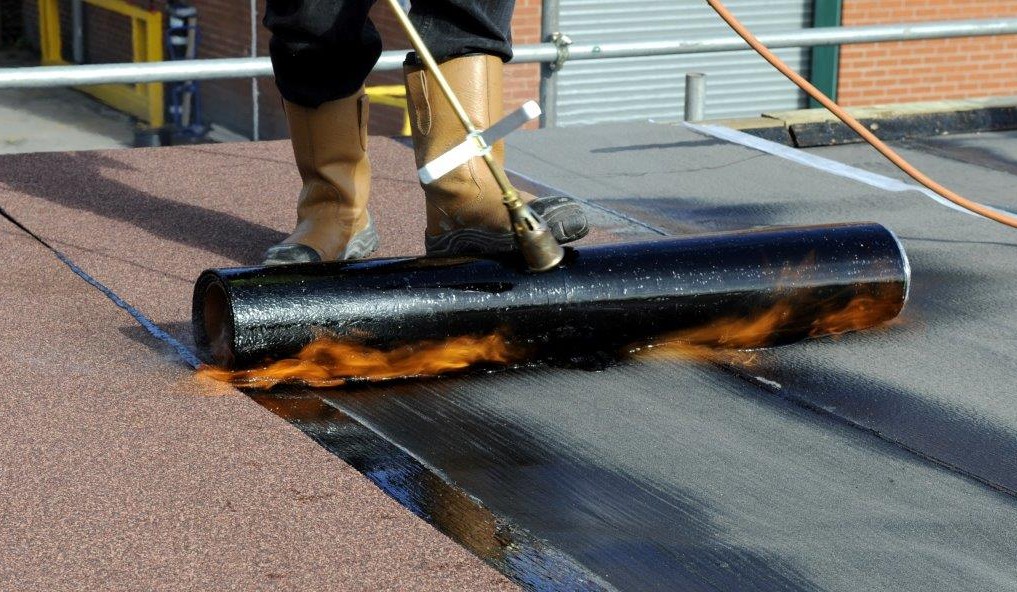
Torch On Roofing is a roofing system made of bitumen mixed with special polymers. It is a type of modified bitumen roofing. During installation, a bitumen torch application is used to heat the membrane so it sticks firmly to the roof surface.
This system uses strong roofing sheets that seal the surface and protect the structure. It works well for flat roof waterproofing, especially in areas where water may collect. Many commercial flat roof systems in Prince George use this method because it is durable and long-lasting. It is also a reliable option for roof leak repair membrane projects.
In addition, Torch On Roofing can resist chemicals, fumes, and other harmful elements. Therefore, it offers strong and lasting roof protection.
Types of Torch Down Roofing Membrane
There are two main types used in Torch On Roofing systems:
APP (Atactic Polypropylene)
APP is plastic-modified asphalt. It handles high heat very well. Because of this, it is a good choice for roofs exposed to strong sunlight. During a bitumen torch application, APP melts smoothly and bonds well.
SBS (Styrene Butadiene Styrene)
SBS is rubber-modified asphalt. It is more flexible than APP. As a result, it performs better in cold weather. It can expand and contract when temperatures change.
How Torch On Roofing Works
A torch down roofing membrane has two main layers. First, there is the base layer attached to the roof. Second, there is a heat-activated film on the bottom of the membrane.
When heat is applied with a torch, the bottom layer melts. Then, the membrane is pressed onto the roof. As it cools, it forms a tight seal. This seal helps stop water from entering the building.
How to Apply a Torch On Roofing System
To make it simple, the process has two main steps:
- Surface Preparation
First, clean the roof surface. Remove dust, debris, and moisture.
Next, make sure plumbing and other work is finished.
Then, check that the roof has at least a 1% slope for drainage.
After that, apply a primer coating.
Proper roofing underlayment installation in Prince George is also important before placing the membrane.
- Membrane Installation
Unroll the torch down roofing membrane across the roof.
Then, use a bitumen torch application to heat the sheet.
As it melts, press it firmly into place.
Continue the process until the area is covered.
Although asphalt roll roofing may be used for small projects, Torch On Roofing is stronger and lasts longer.
Pros of Torch On Roofing
There are many benefits to choosing Torch On Roofing:
- First, it is strong and durable.
- It works very well for flat roof waterproofing.
- The installation process is fast and fairly clean.
- It protects against sun, wind, and rain.
- It is a trusted system in commercial flat roof systems in Prince George.
- It is effective for roof leak repair membrane needs.
- It comes in different finishes, so it looks neat and professional.
Cons of Torch On Roofing
However, there are a few downsides:
- The starting cost can be higher than asphalt roll roofing.
- Professional installers are required for safe application.
- Since an open flame is used, safety steps must be followed carefully.
Torch On Roofing is a strong and reliable roofing system. It uses modified bitumen roofing and torch down roofing membrane to create a tight seal on flat roofs. Although the upfront cost may be higher, it offers long-term performance and durability. Therefore, it remains a popular choice for homes and commercial flat roof systems in Prince George.